30 Jan 2018 Narrow Road Insights
 The “big reveal” of the Kingdom of Heaven and how Jesus’ followers would live in this world is presented by Jesus in Matthew 5-7. Those men knew the old Jewish religion from birth but this new way of life is so completely different that they had no idea what Christ Jesus is talking about. After this foundational talk The Lord had to reveal more pieces of truth step by step over the three years of his ministry so they could digest this radical new way of living.
Remember this teaching was for His disciples only, not anyone else. If you are not His follower you will not understand.
A quick reminder of the previous articles.
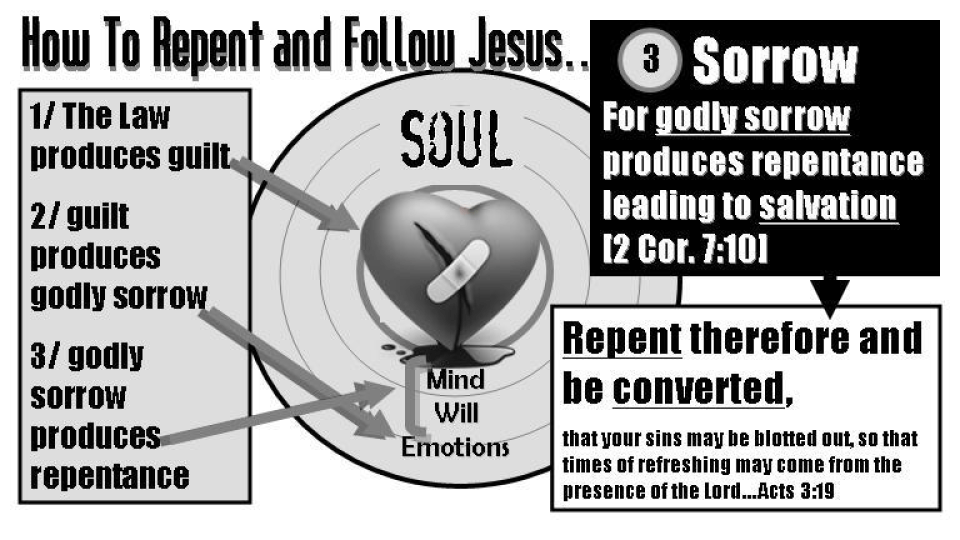 Part 1: Narrow Way of Repentance: Salvation
3 “God blesses those who are poor and realize their need for him, for the Kingdom of Heaven is theirs.
4 God blesses those who mourn, for they will be comforted.
5 God blesses those who are humble, for they will inherit the whole earth.
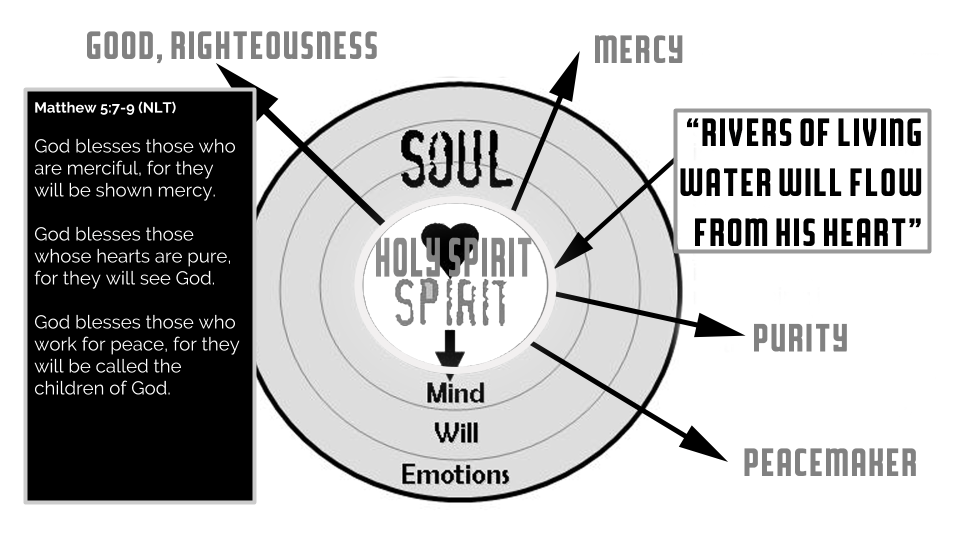 Part 2: The Narrow Way of Discipleship: The Holy Spirit Life
6 God blesses those who hunger and thirst for righteousness, for they will be satisfied.
7 God blesses those who are merciful, for they will be shown mercy.
8 God blesses those whose hearts are pure, for they will see God.
9 God blesses those who work for peace, for they will be called the children of God.
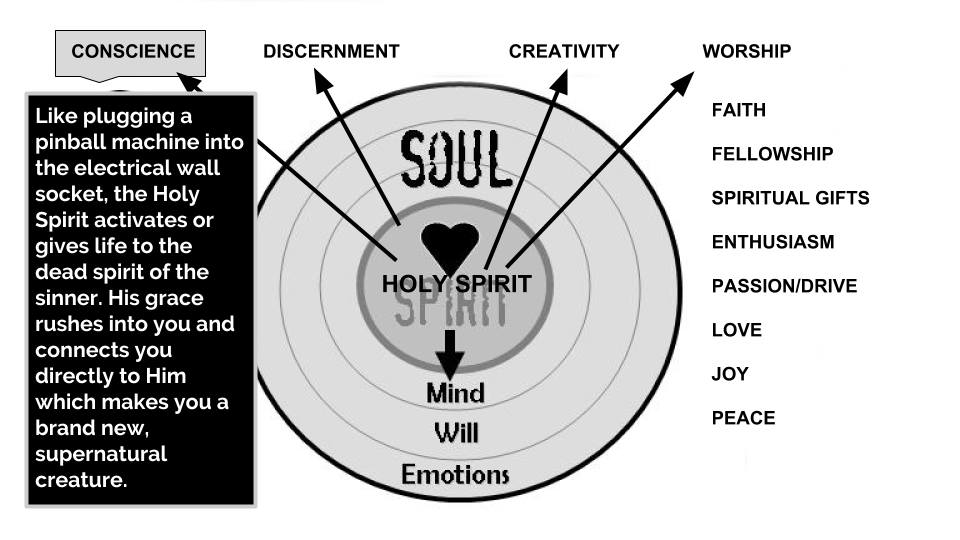
Now in Part 3 we discover the righteousness flooding from the Holy Spirit lifts the normal Christian to live life in such a way that they easily do far MORE than fulfill the law of God.
“For I tell you, unless your righteousness (your uprightness and your right standing with God) is more than that of the scribes and Pharisees, you will never enter the kingdom of heaven.” Matthew 5:20 (AMP)
You must understand this righteousness is not just an applied righteousness from God like a coat, but the real righteousness that transforms your behavior. You cannot live like the Pharisees and just believe you are more righteous because of Jesus. He makes this abundantly clear through the next whole section of His talk.
He compared the lifestyle demanded by the Law that the Pharisees taught to the FAR MORE righteous lifestyle of the new heart and new spirit that He provides through the Holy Spirit.
In fact, the very Greek word that is translated more or exceed is not the same as we use in English. Superabound is the meaning and that is the difference between I giving you a penny or one billion dollars. It is not giving you two cents instead of one.
Part 3: The Narrow Way of Superabounding Righteousness: Bless Your World With Your Holy Spirit Life
10 God blesses those who are persecuted for doing right, for the Kingdom of Heaven is theirs.
11 God blesses you when people mock you and persecute you and lie about you and say all sorts of evil things against you because you are my followers.
12 Be happy about it! Be very glad! For a great reward awaits you in heaven. And remember, the ancient prophets were persecuted in the same way.
13 “You are the salt of the earth. But what good is salt if it has lost its flavor? Can you make it salty again? It will be thrown out and trampled underfoot as worthless.
14 “You are the light of the world—like a city on a hilltop that cannot be hidden.
15 No one lights a lamp and then puts it under a basket. Instead, a lamp is placed on a stand, where it gives light to everyone in the house.
16 In the same way, let your good deeds shine out for all to see, so that everyone will praise your heavenly Father.
Two things are clear:
1/ God floods His saints with the Holy Spirit so that they are the truth givers of each generation preserving the earth by proclaiming the Good News and sharing eternal life for all generations until Christ returns. (verse 13)
2/ God also blesses the generations of mankind with eternal hope by shining the light of His holy life from inside the skin of all His followers as they live out His righteousness. God is clearly seen by the vast numbers of lost humanity drawn to Him by the love they see from the church. (verse 14 and 15)
The Lord now offers 6 examples of the superior life of MORE RIGHTEOUSNESS that believers live as the normal Christian life. This is in sharp contrast to the fundamental laws that the Pharisees taught but could not live. Later he explains more about the failure of their religious leaders under the law, but not this day (Matthew 23).
TEACHING ABOUT THE LAW: “God blesses those who hunger and thirst for righteousness, for they will be satisfied.” (vs 6)
 Matthew 5:17-20 (NKJV)
17 “Do not think that I came to destroy the Law or the Prophets. I did not come to destroy but to fulfill.
18 For assuredly, I say to you, till heaven and earth pass away, one jot or one tittle will by no means pass from the law till all is fulfilled.
19 Whoever therefore breaks one of the least of these commandments, and teaches men so, shall be called least in the kingdom of heaven; but whoever does and teaches them, he shall be called great in the kingdom of heaven.
20 For I say to you, that unless your righteousness exceeds the righteousness of the scribes and Pharisees, you will by no means enter the kingdom of heaven.
Much later in Matthew 23:2-3 (NLT) Jesus reveals, “The teachers of religious law and the Pharisees are the official interpreters of the law of Moses. So practice and obey whatever they tell you, but don’t follow their example. For they don’t practice what they teach.”
The best the teachers of Israel had to offer through the law left everyone ending up in hell. But the righteousness pouring into the souls of the true Christians by the Holy Spirit FAR EXCEEDED the self righteousness the Pharisees could muster in their own strength. The righteousness that floods believers is MORE, MORE, WAY MORE than the Pharisees could ever create.
Paul explained this truth many years later to the followers of Jesus. In Romans 8:3-4 (NKJV) he wrote:
3 For what the law could not do in that it was weak through the flesh, God did by sending His own Son in the likeness of sinful flesh, on account of sin: He condemned sin in the flesh, 4 that the righteous requirement of the law might be fulfilled in us who do not walk according to the flesh but according to the Spirit.
They could not understand all of this on this day, so our wise Savior blew their minds with the truth of the results of this whole new way of living. The contrast is made clear so the disciples would see how miraculous the new life in Christ really was.
ONE. (the GREATER righteous life of mercy)
The first example compares the law of murder to the HIGHER righteous life of mercy, one of His great blessings of the Holy Spirit life.
TEACHING ABOUT ANGER: “God blesses those who are merciful, for they will be shown mercy.” (vs 7)
 21 “You have heard that our ancestors were told, ‘You must not murder. If you commit murder, you are subject to judgment.’ 22 But I say, if you are even angry with someone, you are subject to judgment! If you call someone an idiot, you are in danger of being brought before the court. And if you curse someone, you are in danger of the fires of hell. 23 “So if you are presenting a sacrifice at the altar in the Temple and you suddenly remember that someone has something against you, 24 leave your sacrifice there at the altar. Go and be reconciled to that person. Then come and offer your sacrifice to God. 25 “When you are on the way to court with your adversary, settle your differences quickly. Otherwise, your accuser may hand you over to the judge, who will hand you over to an officer, and you will be thrown into prison. 26 And if that happens, you surely won’t be free again until you have paid the last penny.
Our Lord uses the term “But I say” and explains that the ABUNDANTLY MORE RIGHTEOUSNESS of the Spirit drives Christians to such extremes that they show so much mercy that murder is not even an option. Instead of revenge, they forgive, reconcile with their enemies, and settle their differences even when it is the hardest thing they ever had to do in their lives. Nothing stops them from restoring relationships. If the Christian has offended or wrongfully gained from another they let nothing stop them from doing the right thing by paying the last penny back without going to jail. The narrow road follower of Jesus shows mercy and forgiveness and works hard to restore any relationship back to where it was before the offense was committed.
The righteous Christian does the will of God.
TWO. (the HIGHER moral standard of purity)
The second example contrasts the law’s standard of marriage and adultery with THE HIGHER MORAL STANDARD OF PURITY, another one of His great blessings of the Holy Spirit life.
TEACHING ABOUT ADULTERY: “God blesses those whose hearts are pure, for they will see God.” (vs 8)
27 “You have heard the commandment that says, ‘You must not commit adultery.’ 28 But I say, anyone who even looks at a woman with lust has already committed adultery with her in his heart. 29 So if your eye—even your good eye—causes you to lust, gouge it out and throw it away. It is better for you to lose one part of your body than for your whole body to be thrown into hell. 30 And if your hand—even your stronger hand—causes you to sin, cut it off and throw it away. It is better for you to lose one part of your body than for your whole body to be thrown into hell.
Again Jesus uses the term, “But I say” to reveal the power of purity that the indwelling Holy Spirit demands. He convicts and pushes the saints to stop staring before they fail and lust after someone. If your TV tempts you turn it off. If that isn’t enough throw it away. If you can’t keep someone at work to stay away from you, then get a transfer or a new job. The Holy Spirit is pure and demands that every Christian remove everything that they can from them to free them to walk in the will of God.
If you are really a saint, God gives you the power of self-control. If you fail in your thoughts quickly repent and “flee youthful lusts.” (2 Timothy 2:22) Get out of there before you are tempted to lust. And He always gives a way of escape from temptation. Paul reminds the Christians years after Jesus preached this message in 1 Corinthians 10:13 (NLT) “The temptations in your life are no different from what others experience. And God is faithful. He will not allow the temptation to be more than you can stand. When you are tempted, he will show you a way out so that you can endure.”
The righteous follower of Jesus does the will of God.
THREE. (the PURE righteous way of faithfulness)
The third example contrasts the failure of divorce and the MORE RIGHTIOUS WAY of faithfulness through sacrificial love that God provides.
TEACHING ABOUT DIVORCE: “God blesses those whose hearts are pure, for they will see God.” (vs 8)
31 “You have heard the law that says, ‘A man can divorce his wife by merely giving her a written notice of divorce.’ 32 But I say that a man who divorces his wife, unless she has been unfaithful, causes her to commit adultery. And anyone who marries a divorced woman also commits adultery.
The great “I AM” declares “But I say” and releases floods of righteous love pouring through the soul of the Christian, and divorce is not an option. Paul explains it in 1 Corinthians 13:7 (NLT) “Love never gives up, never loses faith, is always hopeful, and endures through every circumstance.” The new creature in Christ obeys the will of God in spite of all the hard circumstances, but the hypocrite does not. But remember no one can make someone else do what is right except the living God indwelling the follower of Jesus and many faithful saints suffer loss from a divorce.
The righteous saint does the will of God. (Matthew 5:11)
FOUR. (the MORE righteous way of truthfulness)
The fourth example pits the MORE RIGHTEOUS way of truthfulness verses the dishonesty the Jews lived under the law.
TEACHING ABOUT VOWS “God blesses those whose hearts are pure, for they will see God.”
33 “You have also heard that our ancestors were told, ‘You must not break your vows; you must carry out the vows you make to the LORD.’
34 But I say, do not make any vows! Do not say, ‘By heaven!’ because heaven is God’s throne.
35 And do not say, ‘By the earth!’ because the earth is his footstool. And do not say, ‘By Jerusalem!’ for Jerusalem is the city of the great King.
36 Do not even say, ‘By my head!’ for you can’t turn one hair white or black.
37 Just say a simple, ‘Yes, I will,’ or ‘No, I won’t.’ Anything beyond this is from the evil one.
The lying Jewish people back then created all kinds of excuses to cheat in business deals and claim they told the truth by using vows. But Jesus says purity is simple: no white lies, half lies, or tiny exaggerations come from a pure heart. Jesus’ new civilization, the Kingdom of God, is free from dishonest people. His standards are HIGHER than any civilization on earth and is possible because God dwells inside His people and causes them to obey His commands.
The righteous disciple tells the truth which is the will of God.
FIVE. (the HIGHER good of peace through forgiveness)
The fifth example compares the controlled revenge of the law they were taught compared to the new and HIGHER GOOD of forgiveness and extreme love. This also is one of God’s great blessings of the Holy Spirit life as his people work for peace.
TEACHING ABOUT REVENGE “God blesses those who work for peace, for they will be called the children of God.”
38 “You have heard the law that says the punishment must match the injury: ‘An eye for an eye, and a tooth for a tooth.’ 39 But I say, do not resist an evil person! If someone slaps you on the right cheek, offer the other cheek also. 40 If you are sued in court and your shirt is taken from you, give your coat, too. 41 If a soldier demands that you carry his gear for a mile, carry it two miles. 42 Give to those who ask, and don’t turn away from those who want to borrow.
The Great Teacher, screams again, “But I say” and takes all of us past normal into the twilight zone of the impossible. When it seems unfair, overwhelming unjust, and wrong the Holy Spirit releases super amounts of grace to move our hearts to forgive insults, give those who sue us far more than they are stealing from us, do far MORE than the law demands, and sacrificially give to those who you suspect are trying to misuse your friendship.
The peacemaking Christians bring peace to unjust conflicts, overbearing law enforcement, domineering employers, and crooked judges by MORE THAN fulfilling their demands and wishes.
Like Jesus they love their neighbors as themselves. They do the will of God.
SIX. (the HIGHEST good of peace through love)
And finally example six contrasts the justice of the law with the HIGHER STANDARD of working for peace by loving your enemies.
TEACHING ABOUT LOVE FOR ENEMIES “God blesses those who work for peace, for they will be called the children of God.”
43 “You have heard the law that says, ‘Love your neighbor’ and hate your enemy. 44 But I say, love your enemies! Pray for those who persecute you! 45 In that way, you will be acting as true children of your Father in heaven. For he gives his sunlight to both the evil and the good, and he sends rain on the just and the unjust alike. 46 If you love only those who love you, what reward is there for that? Even corrupt tax collectors do that much. 47 If you are kind only to your friends, how are you different from anyone else? Even pagans do that. 48 But you are to be perfect, even as your Father in heaven is perfect.
The law makes sure those who criminally offend you are punished. The law pays back the wicked! But Jesus proclaims to all that His people are so flooded by God’s love that they get great rewards from Him because they love the criminals who harm them. They ignore the need for revenge and justice and God uses His ordained peacemakers to reach the worst of the worst people so He can make them trophies of grace.
God blesses the wicked and the righteous. God does not just show kindness to His friends and children. No He shows kindness to all mankind. Each generation desperately needs to see how God loves through His local churches. As the light shines from the people of God, the wicked are drawn to the light.
The righteous love the wicked in spite of their gross wickedness and fulfil God’s will to love all the world because they are not mere people but are flooded with the Holy Spirit of God are MORE THAN ABLE to glorify God with their works, lifestyle, and attitudes.
Their actions MORE THAN prove who they really are.

Matthew 22:37-40 (NLT)
37 Jesus replied, “‘You must love the LORD your God with all your heart, all your soul, and all your mind.’
38 This is the first and greatest commandment.
39 A second is equally important: ‘Love your neighbor as yourself.’
40 The entire law and all the demands of the prophets are based on these two commandments.”
Matthew 5:44 (NLT) But I say, love your enemies! Pray for those who persecute you!
Luke 10:29-36 (NKJV)
29 But he, wanting to justify himself, said to Jesus, “And who is my neighbor?”
30 Then Jesus answered and said: “A certain man went down from Jerusalem to Jericho, and fell among thieves, who stripped him of his clothing, wounded him, and departed, leaving him half dead.
31 Now by chance a certain priest came down that road. And when he saw him, he passed by on the other side.
32 Likewise a Levite, when he arrived at the place, came and looked, and passed by on the other side.
33 But a certain Samaritan, as he journeyed, came where he was. And when he saw him, he had compassion.
34 So he went to him and bandaged his wounds, pouring on oil and wine; and he set him on his own animal, brought him to an inn, and took care of him.
35 On the next day, when he departed, he took out two denarii, gave them to the innkeeper, and said to him, ‘Take care of him; and whatever more you spend, when I come again, I will repay you.’
36 So which of these three do you think was neighbor to him who fell among the thieves?”
The Samaritan loved the enemy who hated him, and Jesus says it plainly, love and pray for those who hate you. And the “children of God” fulfill the Father’s will.
Continue to Part 4



 If you are a Christian, you are predestined for great works by God’s grace!


 1. An Exhortation Must be Based in Scripture by Giving Clear and Precise Steps of Action
 If you define “worldly” as rock or rap music styles, certain hair styles, clothes, cars, boats, golf, football, food, etc… well then you include Jesus as “worldly.” Let me explain…
 1/ All the music that we sing, in all of the churches around the world, is worldly. It did not come down from heaven with Jesus. All of it was created by people in and of this world. Jesus did not give seminars on godly and heavenly music styles but sang the songs he learned from his worldly family, friends, and the Jewish people.
 2/ The Bible orders the church to sing psalms, hymns, and spiritual songs. God’s Word commands, “Let the word of Christ dwell in you richly in all wisdom, teaching and admonishing one another in psalms and hymns and spiritual songs, singing with grace in your hearts to the Lord.” [Col 3:16 (NKJV)] This is not a multiple choice question. We are told to sing all three types of songs to each other and the Lord. But the rhythm, musical notes, and style are left to us. The themes are given to us in the Bible, but not the music.
 3/ What does music have to do with reaching the lost? Who is really spiritually superior? I bet the Christian who gives up his style and blesses the immature and guests with wholeheartedly singing music, in their style. By every possible means, I surrender my likes to win the lost. No one is talking about sinning, you must stop hiding from change by claiming it is “worldly.”
 4/ With so many types of music what should we do? Listen carefully to the Word, “When I am with those who are weak, I share their weakness, for I want to bring the weak to Christ. Yes, I try to find common ground with everyone, doing everything I can to save some. 23 I do everything to spread the Good News and share in its blessings.” [1 Cor 9:22-23 (NLT)]